
Five Layers of Reality


Universe beyond Human Perception
Human cognition evolved to handle a pretty narrow slice of existence — the world of meters, seconds, and objects you can touch. Our brains are wired for survival in that everyday classical world, not for grasping what the universe is actually made of at its deepest levels.
And yet, the more physics has advanced, the clearer it's become that what we see and feel around us is just the surface. Beneath it lie layers of reality that get stranger and harder to picture the further down you go.
Most of the universe, it turns out, operates in ways our intuition simply wasn't built to handle.

The Classical Scale — The Everyday World of Cause and Effect
A layer which we can somewhat perceive. Objects have definite positions, forces push things around in predictable ways, and if you know where something is and how fast it's moving, you can figure out where it'll be next. Isaac Newton worked out the math for all this in the 1600s, and it's held up remarkably well for anything happening at human scales and beyond Human scales too.
Classical mechanics comes in a few equivalent flavors — Newtonian, Lagrangian, Hamiltonian — but they all describe the same thing: a physical world that evolves smoothly and deterministically through time.
Some of its defining features:
Objects follow definite paths through space
Cause and effect are clear and traceable
Energy, momentum, and angular momentum are all conserved
For anything moving slowly compared to light and large enough that quantum effects don't matter, this description is incredibly accurate. But it starts to crack under pressure. Push to extreme speeds or extreme gravity,
and Newton's picture quietly breaks down.
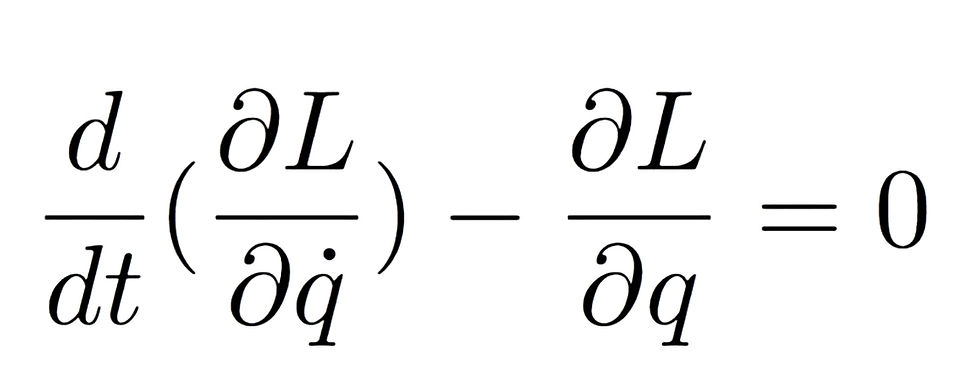
This short and sleek equation embraces all of classical physics--that is what we mean by mathematical elegance.
The Relativistic Scale — When Space and Time Bend
Once velocities get close to the speed of light, or gravity becomes genuinely intense, you've crossed into Einstein's territory. His theory of general relativity, developed in the early twentieth century, rewrites the rules in a striking way: gravity isn't a force at all. It's the curvature of spacetime itself.
Matter and energy warp the fabric of space and time, and everything else — planets, light, you — just follows the curves. The math at the heart of this is the Einstein field equations:

The left side describes how spacetime curves; the right side describes what's causing it. This simple equation works on Whole another level, when compared to the classical scale.
The predictions that follow from this are genuinely strange:
Clocks run slower in stronger gravitational fields
Moving objects appear contracted along their direction of travel
Two observers in relative motion can disagree on whether events happened at the same time
Massive objects bend the path of light passing nearby
One of the most dramatic confirmations came in 2015, when physicists directly detected gravitational waves — ripples in spacetime itself, generated by two black holes spiraling into each other a billion light-years away.
Spacetime, in other words, isn't just a backdrop. It's a physical thing that can stretch, compress, and shake.
The Quantum Scale — Where Certainty Dissolves
Zoom in to the scale of atoms and smaller, and classical physics doesn't just bend — it completely breaks. Welcome to quantum mechanics, where the rules are deeply counterintuitive.
In quantum theory, a physical system isn't described by a definite position and velocity. Instead, it's represented by a wavefunction — a mathematical object that encodes the probabilities of different outcomes when you make a measurement. That wavefunction evolves over time according to the Schrödinger equation:

Before you observe it, a particle doesn't necessarily have a definite state at all. The weirdness runs deep:
Superposition — a system can exist in multiple states simultaneously until measured
Entanglement — two particles can be correlated in ways that persist across any distance
Tunneling — particles can pass through barriers they classically shouldn't be able to
The double-slit experiment captures this strangeness nicely: shoot electrons one at a time at a screen with two slits, and over time they build up an interference pattern — as if each electron somehow went through both slits at once.
The classical idea of a particle tracing out a clean path through space simply doesn't apply here. Reality at small scales is genuinely probabilistic.
Its as if the entire nature of reality as we know it collapsed on itself.
The Quantum Field Scale — There Are No Particles, Only Fields

Here's where things get even more abstract. Modern physics doesn't actually think of electrons or quarks as tiny billiard balls. The deeper picture, developed through quantum field theory, is that the fundamental stuff of the universe is fields — continuous entities that stretch across all of space.
What we call "particles" are really just excitations in these fields. An electron is a ripple in the electron field. A photon is a ripple in the electromagnetic field. Everything you've ever seen or touched is made of field vibrations.
The most successful version of this framework is the Standard Model, which describes three of the four fundamental forces through the mathematics of gauge symmetry. In this picture:
Matter is made of fermionic fields
Forces are mediated by bosons — particles that carry interactions between matter fields
The specific forces that exist are tied to the symmetry structure of the theory
The Standard Model is one of the most precisely tested theories in the history of science. But it has a problem: it doesn't include gravity. And when physicists try to shoehorn gravity into the quantum field framework, things go badly wrong.

The Planck Scale — Where Our Best Theories Break Down
At the very bottom of this hierarchy lies the Planck scale — distances around 10^‐35 meters, inconceivably small compared to anything we've ever probed experimentally. At this scale, both quantum mechanics and general relativity become relevant simultaneously, and neither one can handle that combination on its own. Both theories need some other framework to unite each other.
What happens to spacetime down there? Nobody knows for certain. Many physicists suspect it stops being smooth and continuous — that at these scales, geometry itself becomes fuzzy and turbulent, a seething froth sometimes called quantum foam.

Two major research programs are trying to figure this out:
String Theory proposes that what we think of as particles are actually tiny vibrating strings, and that the different vibrational modes give rise to different particles and forces

Loop Quantum Gravity takes a different approach, suggesting that space itself is made of discrete quantized units rather than a smooth continuum.

Neither theory is complete, and neither has made predictions we can yet test. A full theory of quantum gravity remains one of the deepest open problems in all of physics.
So what to make of it??
Looking across these five layers — from the everyday world of falling apples to the Planck-scale frontier where spacetime itself may dissolve — a pattern emerges. The deeper you go, the more abstract the mathematics becomes, and the further reality drifts from anything resembling everyday experience.
It's just what the universe turns out to be like.
Our intuitions were forged by millions of years of navigating a world of medium-sized objects moving at medium speeds. They were never designed to picture quantum fields or curved spacetime, and they show it. The scale and complexity is so vast for a Human brain that I would argue it would take millions of Human brains combined to even percieve such a reality. What we've had to do instead is follow the mathematics wherever it leads — even when it leads somewhere genuinely alien.
The universe isn't just stranger than we imagine. It seems to be stranger than we can imagine.


Comments